Serving St. Louis & Surrounding Areas

Business on the Line? Get Emergency Commercial HVAC Services in Oakville
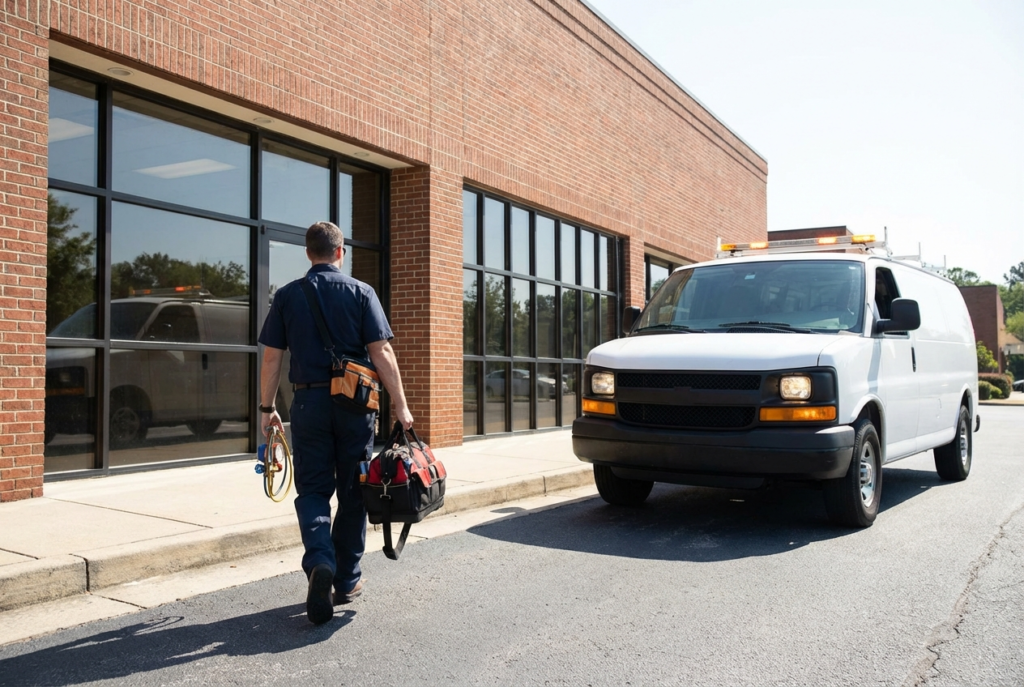
Your building has no heat on a February morning and employees are calling in. Or it’s July, your AC quit overnight, and customers are walking back out the door. Commercial HVAC emergencies don’t wait for a convenient time. They hit on weekends, holidays, and the busiest days of your year. Emergency commercial HVAC services in Oakville means someone picks up the phone and gets to your building fast — not tomorrow, not after the holiday weekend. Now.
Emergency Commercial HVAC Services In Oakville — What Happens When Your System Goes Down
Why Commercial HVAC Emergencies Hit Harder Than Residential
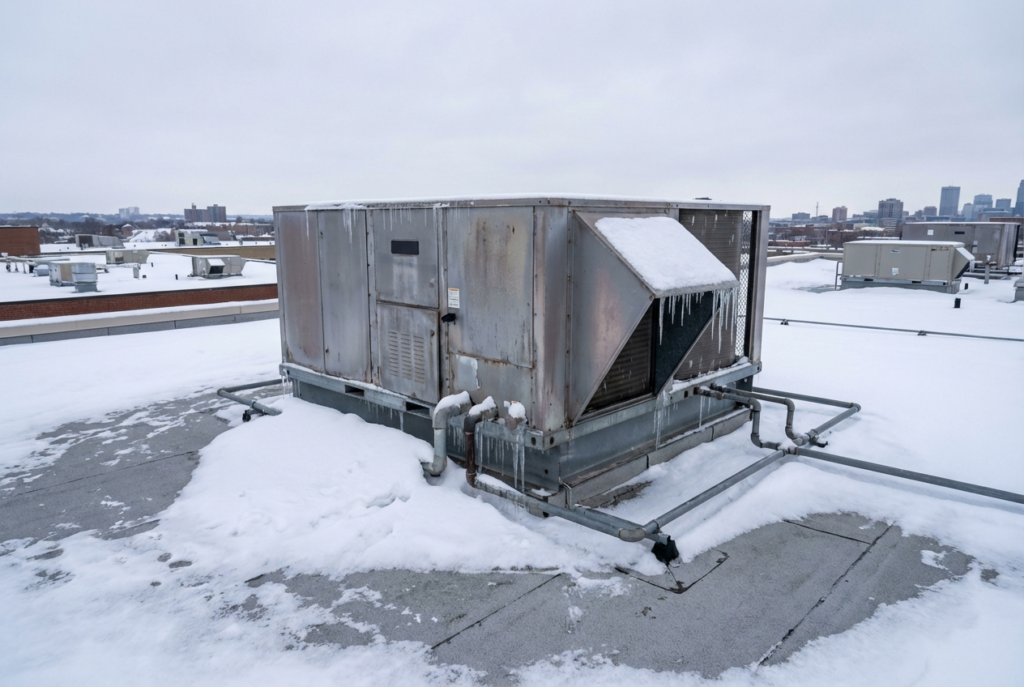
When a homeowner’s furnace quits, they put on a sweater and call in the morning. When a commercial building loses heat or cooling, the clock starts immediately. Employees can’t work in a 45-degree office. Customers won’t stay in a retail space that feels like a sauna. A restaurant without working refrigeration has a food safety problem within hours. The stakes aren’t comparable.
Commercial buildings also have more complexity working against them when something fails. A single rooftop unit might control half your building. A failed compressor in a multi-zone system can leave an entire floor without air. The bigger the building, the more people affected, and the faster the business impact adds up. A two-hour residential repair window is inconvenient. A two-hour commercial window can mean thousands of dollars in lost productivity or sales.
That’s why response time matters so much on the commercial side. A contractor who can get to a home by tomorrow afternoon is perfectly reasonable for residential work. That same timeline is a problem for a business with 40 employees sitting in the cold or a store turning customers away at the door. Emergency commercial HVAC service means understanding what’s actually at stake and treating the call accordingly.
Repair or Replace — Making the Right Call Under Pressure
The hardest decision in a commercial HVAC emergency is figuring out whether to fix what you have or replace it. Nobody wants to spend $10,000-15,000 on a replacement when they’re already in crisis mode. But putting $4,000 into a repair on a 16-year-old unit that’s going to fail again in six months isn’t a good answer either. You need a straight answer fast.
A few things point clearly toward replacement. If the compressor failed on a unit over 12-15 years old, replacement usually makes more sense than repair. Compressors run $2,500-5,000 installed, and a unit that’s already that age has other components approaching end of life. If refrigerant type is also a factor — older units using R-22 are subject to an EPA phaseout that makes the refrigerant increasingly expensive and harder to source — that tips the math further toward replacement.
Repair makes sense when the system is under 10 years old, the failed component is relatively minor, and the rest of the system checks out. A bad capacitor, a failed contactor, or a refrigerant leak on a younger unit is a straightforward fix. The key is getting an honest assessment from a technician who isn’t trying to sell you a new unit you don’t need. Ask them directly — if this were your building, what would you do? The answer tells you a lot about who you’re dealing with.
What to Do in the First Hour Your System Fails
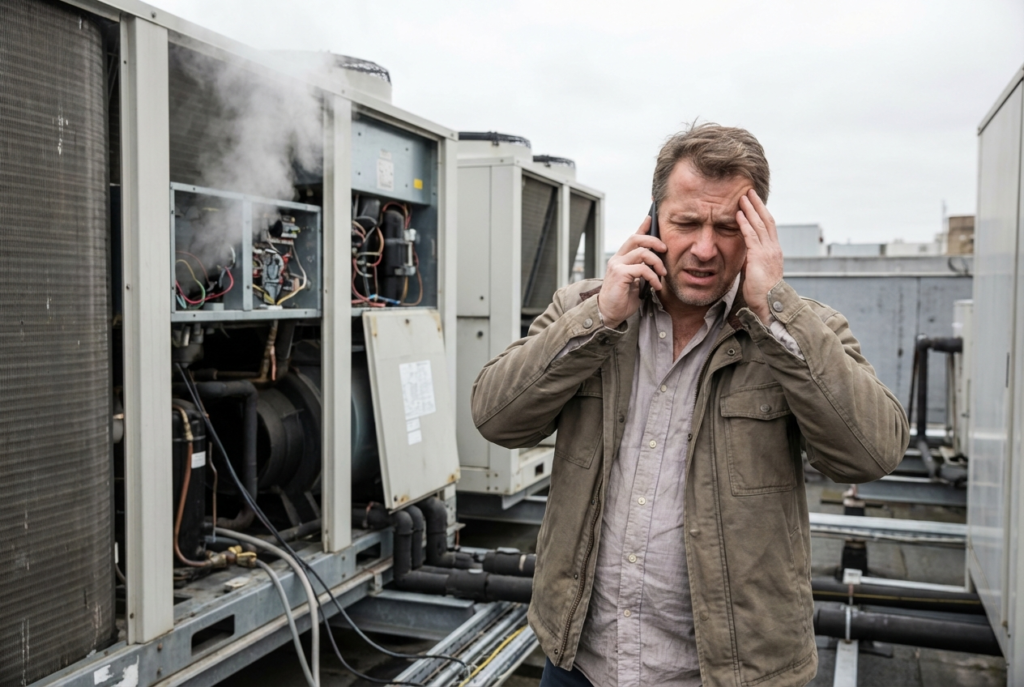
The first hour after a commercial HVAC failure matters more than most people realize. What you do — and don’t do — in that window affects how fast you get back to normal. First, check the obvious before calling anyone. Tripped breakers, blown fuses, and thermostat issues cause a surprising number of emergency calls that turn out to be simple fixes. Check your electrical panel, verify the thermostat is set correctly, and make sure the unit itself hasn’t shut off on a safety switch.
If it’s not something simple, get on the phone with an HVAC contractor immediately rather than waiting to see if it resolves on its own. Commercial systems don’t self-correct. A refrigerant leak doesn’t stop leaking. A failed component doesn’t restart. Every hour you wait is an hour your building is uncomfortable and your business is affected. When you call, have your unit information ready — model number, age if you know it, and a description of what it’s doing or not doing. That information helps the technician show up prepared.
While you’re waiting, think about your employees and customers. Can part of the building be closed off to reduce the affected space? Are there portable heaters or fans that can take the edge off temporarily? Is there a reason to close early or delay opening? Those aren’t failures — they’re smart business decisions that protect your people and your reputation while the problem gets fixed. Our team handles everything from straightforward repairs to full system failures, and knowing your situation upfront means we come ready.
How Fast Emergency Commercial Service Actually Happens
Emergency response time varies by contractor and by how slammed the market is. During a cold snap in February or a heat wave in July, every HVAC company in the area is getting calls at the same time. That’s exactly when you most need fast service and exactly when it’s hardest to get. Contractors who prioritize commercial emergency work structure their schedules differently — they hold capacity for urgent calls rather than booking every slot with routine maintenance.
When you call Liberty, the goal is same-day service for commercial emergencies. Not a callback tomorrow, not a scheduled window three days out. We understand that a commercial building down is a different category of urgency than a residential call, and we treat it that way. Depending on time of day and what’s happening in the market, same-day usually means within a few hours of your call.
What happens when you call matters too. You should be talking to someone who can actually assess the situation — not just taking a message. When our tech arrives, they’re diagnosing immediately, not doing a slow walkthrough. The goal is a clear answer within the first 30 minutes: here’s what failed, here’s what it takes to fix it, here’s the cost, and here’s how long it takes. No drawn-out assessments, no waiting on a quote that takes two days to arrive.
Temporary Fixes That Buy You Time vs. Ones That Waste It
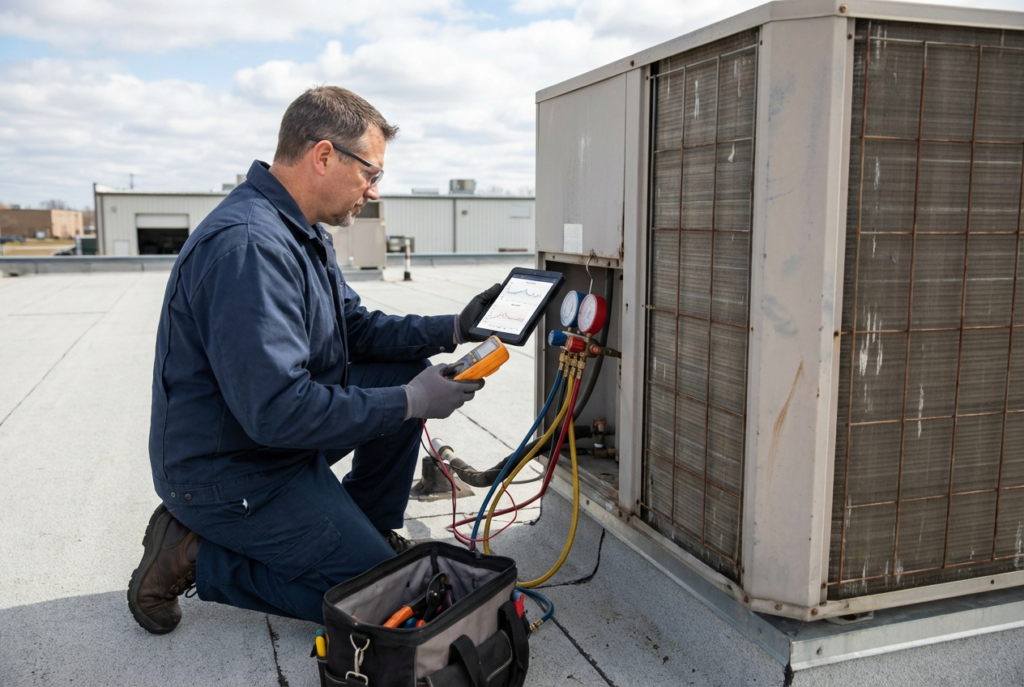
Not every emergency gets fully resolved in one visit. Sometimes a part needs to be ordered. Sometimes a full replacement is the right call but can’t happen until the next day. In those situations, knowing what temporary measures are actually worth trying — and which ones aren’t — saves you money and frustration.
Portable heating and cooling units are the most legitimate temporary option for commercial spaces. Industrial portable AC units can handle a surprisingly large space and can often be sourced same-day from equipment rental companies. They’re not cheap — typically $150-300 per day for commercial-grade units — but they can keep a business operational while a permanent fix gets lined up. For heating emergencies in smaller spaces, electric space heaters can take the edge off while you wait, though they’re not a real solution for a large open office or retail floor.
What doesn’t work is ignoring an intermittent failure because the system came back on. Commercial HVAC systems that start failing intermittently are telling you something. A unit that trips off and resets isn’t fixed — it’s failing in slow motion. Running it until it fails completely, especially heading into peak season, almost always turns a manageable repair into a full replacement situation. If your system is acting up, getting someone out before it becomes a full emergency is always the smarter move. Businesses that stay on a twice-yearly service schedule catch most of these patterns before they ever reach crisis point.
Who You Call When You Can’t Afford to Call the Wrong Person
Vetting a Contractor in 10 Minutes or Less
When your building is down, you don’t have time to spend two hours researching contractors. You have about 10 minutes to make a decision you can live with. The fastest filter is a simple phone call. Call the number and pay attention to what happens. Does someone answer who can actually talk through your situation, or do you get a voicemail and a callback promise? Does the person on the phone ask smart questions about your equipment and building, or do they just take your address and say someone will call you back?
Ask one direct question before committing to anything: have you worked on commercial rooftop units before? A residential-focused contractor who takes your emergency call because they have an opening isn’t doing you any favors. They may show up, misdiagnose the problem, and leave you in a worse spot than before — and you’ll still get an invoice. Commercial equipment requires commercial experience. That’s not a preference, it’s just how the equipment works.
Check for a physical address and a real service history in the area. A contractor with 10 years of Google reviews in your city is a different level of accountability than a company that showed up last year. When you’re making a fast decision under pressure, a local track record is the closest thing to a guarantee you’re going to get.
What a Legitimate Emergency Quote Looks Like
A contractor who shows up to a commercial emergency and starts work before giving you a clear number is a problem. Legitimate emergency service includes a diagnosis, a written or clearly verbal quote, and your approval before anything gets done beyond the assessment. The urgency of the situation doesn’t change that process — it just compresses the timeline. You should know what you’re agreeing to before you agree to it.
Watch out for vague estimates that expand after the work starts. A technician who says “probably around $800 but we’ll see once we get into it” on a repair that should be straightforward is setting up a larger invoice. Good contractors give tighter numbers on known repairs. A capacitor replacement is a capacitor replacement — the price range shouldn’t be a mystery. Where real uncertainty exists, a legitimate contractor explains specifically why and gives you a realistic ceiling, not an open-ended range.
Parts markups are worth asking about too. Emergency service sometimes involves sourcing parts quickly, which can add cost. That’s legitimate and understandable. What isn’t legitimate is tripling the cost of a standard part because the situation is urgent. If a quote feels high, ask for a breakdown. A contractor who gets defensive about itemizing a quote is telling you something.
Why Liberty Is the Call to Make in Oakville
Liberty Heating Cooling & Plumbing has been handling commercial HVAC emergencies in Oakville for 27 years. We know the equipment, we know the area, and we understand what it actually means for a business to be without heating or cooling. When you call us for an emergency, you’re not getting triaged into a residential service queue — commercial calls get handled as the priority they are.
We show up with the parts most commonly needed for commercial emergency repairs already on the truck. We give you a clear assessment and a straight answer on repair versus replace before we ask you to commit to anything. And if the situation calls for a temporary fix while a part gets sourced or a replacement gets scheduled, we tell you honestly what that looks like and what it costs.
Businesses already on a routine tune-up schedule with us get priority scheduling when emergencies come up — another reason a twice-yearly agreement pays for itself fast. But even if we’ve never been to your building before, you’ll get the same straight answer and the same urgency. That’s been true for 27 years and it doesn’t change when the phone rings at 7am on a Monday in January.
Call (314) 600-2202 for emergency commercial HVAC services in Oakville. We answer, we respond, and we get your building back to normal fast.