Serving St. Louis & Surrounding Areas

Get Year-Round Comfort with Heat Pump Installation in Oakville
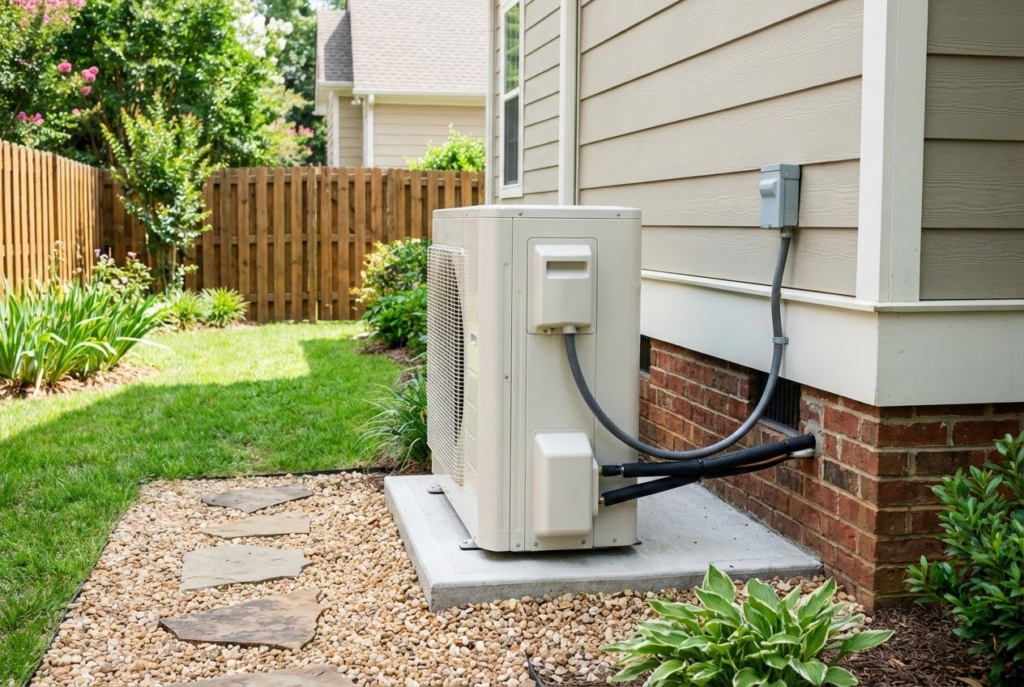
Heat pump installation in Oakville means getting rid of two pieces of equipment and replacing them with one. Right now you probably have a furnace for winter and an AC for summer. Two systems to maintain, two things that can break down, double the headaches. Heat pumps do both jobs with one unit. They cool your house in summer and heat it in winter. Same equipment, flips between the two jobs depending on what you need. One system breaks, not two.
Heat Pump Installation Services
How Heat Pumps Work for Both Heating and Cooling
Heat pumps move heat around instead of creating it from scratch. In summer, they grab heat from inside your house and dump it outside—same as a regular air conditioner. In winter, they do the opposite. They pull heat from outside air and move it into your house. Even when it’s 20 degrees outside, there’s still heat in that air that heat pumps can extract and use. Physics makes it work, not magic.
The key part is the reversing valve. This component switches the direction refrigerant flows through the system. Cooling mode, refrigerant flows one direction. Heating mode, it reverses. Same equipment, same refrigerant, just flowing the opposite way. That’s how one outdoor unit handles both heating and cooling without needing separate furnace equipment.
When Heat Pumps Make Sense in St. Louis
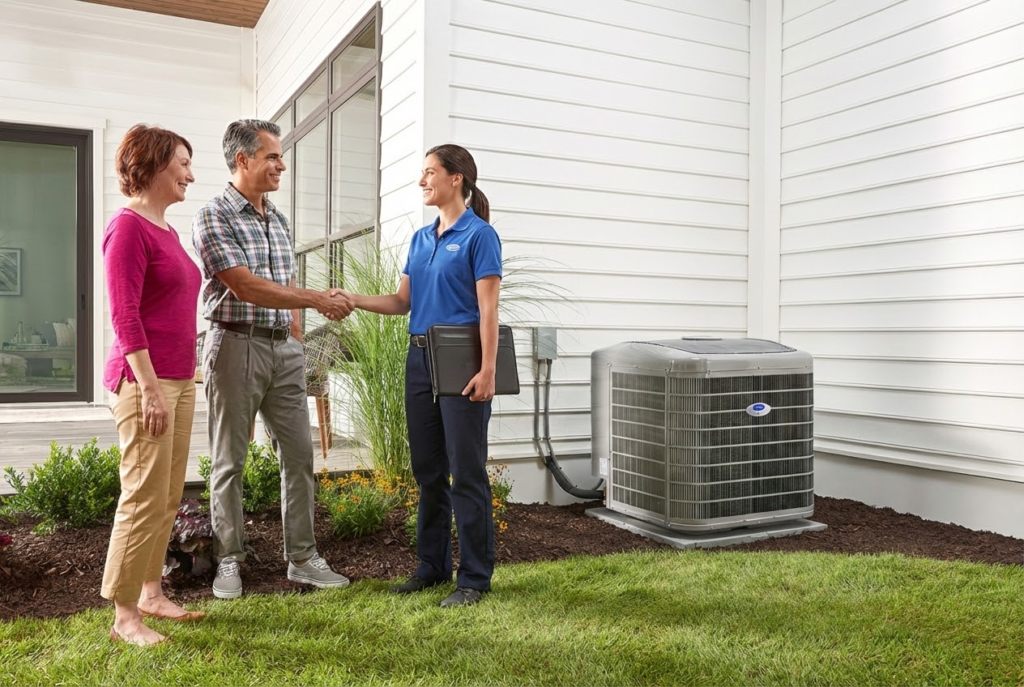
Heat pumps work great in St. Louis because we need both heating and cooling pretty much equally. You run AC from May through September. You run heat from November through March. Installing a heat pump means one system covers all of it. Makes more sense here than places like Minnesota where it’s freezing six months a year, or Arizona where you barely need heat at all.
Modern heat pumps handle Missouri winters fine. Older models from 20 years ago struggled when temperatures dropped below 30 degrees. New systems work efficiently down to zero degrees or lower. We get maybe a handful of nights below zero each winter. The heat pump handles everything else without backup heat kicking in. You’re not sacrificing winter comfort by choosing a heat pump over a traditional furnace.
Heat Pump Installation vs Keeping Your Furnace and AC
Nobody likes talking about what HVAC equipment costs because the answer is always “it depends.” Around St. Louis, getting a new AC installed runs anywhere from $5,000 to $12,000. Furnace replacement costs $4,000 to $10,000, sometimes more if you want a high-efficiency model. If both your systems are getting old and you replace them separately over a couple years, you’re spending $10,000 to $20,000 or more total. Heat pump installation usually runs $8,000 to $18,000 depending on what you get, but you’re knocking out both heating and cooling in one shot.
Here’s the thing nobody tells you about operating costs: it’s complicated. Heat pumps run on electricity for everything. If you’re replacing a gas furnace, your gas bill disappears but your electric bill goes up in winter. Whether that saves you money depends on what electricity and natural gas cost that particular year. Some months you’ll save. Other months maybe not. We can’t promise heat pumps will cut your utility bills in half because that’s not realistic. What we can say is you’re running one newer efficient system instead of two aging ones. That usually works out cheaper over time, but every house is different.
What Size Heat Pump Your House Needs

Picking the right size heat pump matters more than most people realize. Too small and it runs constantly trying to keep up, never quite getting your house comfortable. Too big and it cycles on and off every few minutes, wears out components fast, and doesn’t pull humidity out of the air in summer. Your house feels clammy even when the temperature is right.
The problem is most HVAC companies size equipment by looking at what you had before and installing the same thing. If your old system was wrong from the start, you’re stuck with the same problem in a brand new system. We actually measure your house—square footage, insulation levels, window sizes, which direction they face, ductwork capacity. Then we calculate what heating and cooling load your specific house needs. A 2,000 square foot house with terrible insulation needs way more capacity than a 2,000 square foot house with new windows and spray foam in the attic.
Heat pumps need to handle both heating and cooling, which makes sizing trickier. Your house might need different capacity for heating than cooling. We size for whichever load is bigger so the system can handle both jobs properly. It takes more time than guessing, but your heat pump actually works right instead of struggling for the next 15 years.
Heat Pump Brands We Install
We install all the major heat pump brands—Carrier, Trane, Lennox, Rheem, Goodman, American Standard. The brand matters less than most people think. What really matters is getting the right size system installed correctly. A mid-range Goodman installed properly works better than a top-tier Carrier installed wrong. That said, different brands do have different efficiency levels and price points.
Efficiency ratings tell you how much it costs to run the system. SEER measures cooling efficiency, HSPF measures heating efficiency. Higher numbers mean lower electric bills. A 16 SEER / 9 HSPF unit costs less to operate than a 14 SEER / 8 HSPF unit. You’ll see the difference on your utility bill every single month. The catch is higher efficiency models cost more upfront. Whether spending extra makes sense depends on how long you’re keeping the house and what electricity costs in your area. We’ll walk you through what makes sense for your situation instead of just pushing the most expensive model.
Installation Timeline and Process
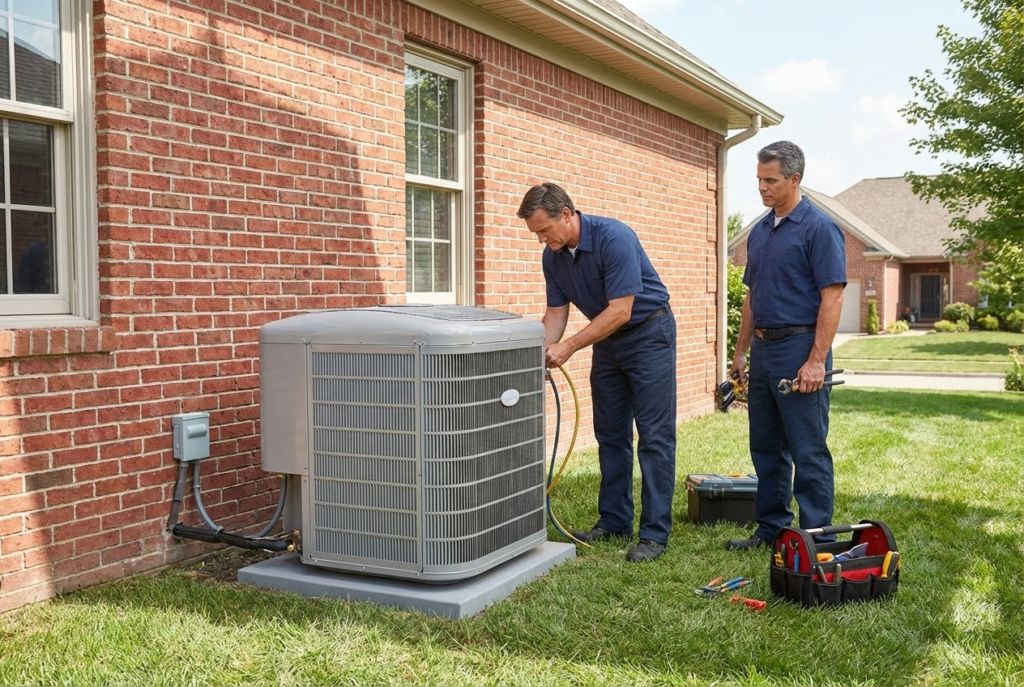
Heat pump installation takes one to two days depending on what we’re replacing. If you already have a heat pump and we’re just swapping it for a newer one, that’s straightforward. Disconnect the old unit, install the new one, connect refrigerant lines and electrical, hook it up to existing ductwork, charge the system, test everything. Usually done in one day.
If we’re replacing separate furnace and AC systems with a heat pump, it takes longer. We’re pulling out your furnace, possibly modifying ductwork where the furnace used to sit, running new refrigerant lines, upgrading electrical service if your panel can’t handle the load. That’s a two-day job in most houses. Complex situations—houses with weird ductwork layouts, electrical panels that need complete replacement, crawl spaces that are hard to access—take longer.
We test everything before we leave. Heating mode, cooling mode, defrost cycle, backup heat if your system has it. Your thermostat gets programmed correctly. We show you how to use it, what settings to avoid, when to change filters. You’re not figuring it out yourself after we’re gone.
Why Choose Liberty for Heat Pump Installation in Oakville
Heat Pumps Aren’t Perfect for Every Situation
Some HVAC companies push heat pumps on everyone because they make good money selling them. Here’s the truth: heat pumps don’t make sense for every house. If your natural gas bill is dirt cheap and you just replaced your furnace three years ago, keeping that furnace and only replacing your AC probably makes more sense. For more options, check out our complete AC installation and replacement services in St. Louis. If your electrical panel is maxed out and upgrading it costs $3,000, that changes the math. If your ductwork is undersized and needs complete replacement, suddenly a heat pump installation turns into a $25,000 project. We’ll tell you when a heat pump makes sense and when it doesn’t. We’re not selling equipment just to hit sales numbers.
What Happens When Your Heat Pump Needs Repair
Here’s something nobody mentions during the sales pitch: when your heat pump breaks down, you lose both heating and cooling. With separate systems, if your AC dies in July and needs emergency replacement, at least you still have heat for winter. If your furnace quits in January, you’ve still got AC for summer. Heat pumps put all your eggs in one basket. That makes regular maintenance more important. It also means you need a company that actually shows up fast when something breaks, not one that puts you on a waiting list for three days while you freeze.
Get Professional Heat Pump Installation
Call (314) 600-2202 for heat pump installation in Oakville. We’ll figure out if a heat pump makes sense for your house and install it right if it does.