Serving St. Louis & Surrounding Areas

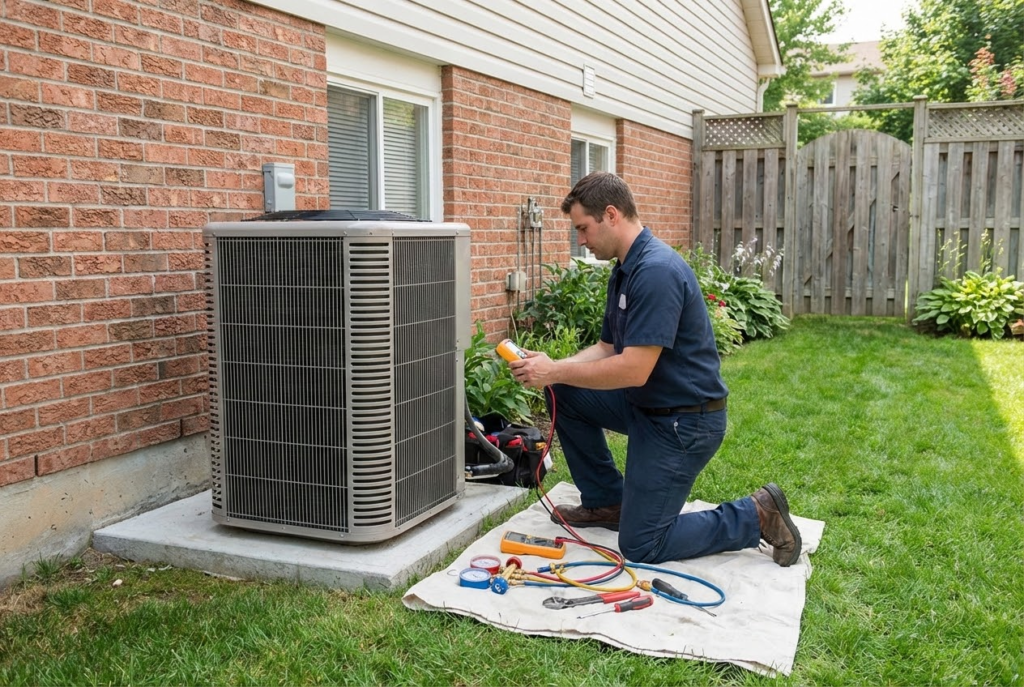
Heat pump repair services in Oakville fix systems that handle both heating and cooling, which means when your heat pump breaks, you lose everything at once. No heat in winter, no AC in summer—one system failure takes out both. Heat pumps fail differently than regular ACs because they work year-round instead of sitting idle half the year. That constant operation wears components faster. Reversing valves fail. Defrost sensors quit working. Refrigerant leaks develop. We diagnose and fix all of it.
St. Louis Heat Pump Repair Services
Why Heat Pumps Break Down More Often Than Regular HVAC Systems
Your heat pump never gets a vacation. Think about a regular house in St. Louis. The furnace runs from November to March. Then it sits off until next winter. The AC runs May through September. Then it shuts off until next summer. Each system works half the year and rests the other half. Heat pumps don’t work that way. They run all year flipping between heating and cooling depending on what you need.
That constant operation beats up components way faster. The reversing valve that switches between heating and cooling gets flipped hundreds of times per year instead of sitting still. Capacitors that are supposed to last 10 years in a regular AC only last 6-7 years in a heat pump because they never get a break. Refrigerant leaks show up sooner from constant pressure changes. A regular AC might go 15 years before needing anything major. Heat pumps usually need their first big repair around year 8 just from working harder.
Strange Noises Your Heat Pump Makes and What They Mean
All heat pumps make a whooshing sound when they switch between heating and cooling. That’s the reversing valve doing its job. Totally normal. What’s not normal is when your heat pump starts grinding, squealing, or banging. Grinding means a motor bearing is dying. Could be the outdoor fan motor or the indoor blower. Either way, something that’s supposed to spin smoothly is rubbing metal on metal.
Squealing is usually a motor going bad or a worn belt on older systems. Loud banging when the system kicks on means something inside broke loose and is rattling around. Hissing is refrigerant escaping from a leak. Constant clicking without the system actually starting means electrical parts trying to work but failing—usually capacitors or contactors.
Ignore these sounds and you’re asking for expensive problems. That grinding motor doesn’t fix itself. It grinds until it seizes up completely and you’re replacing the whole motor instead of just a bearing. That hissing refrigerant leak keeps getting worse until your heat pump stops working entirely.
Ice on Your Heat Pump – Normal or Problem?
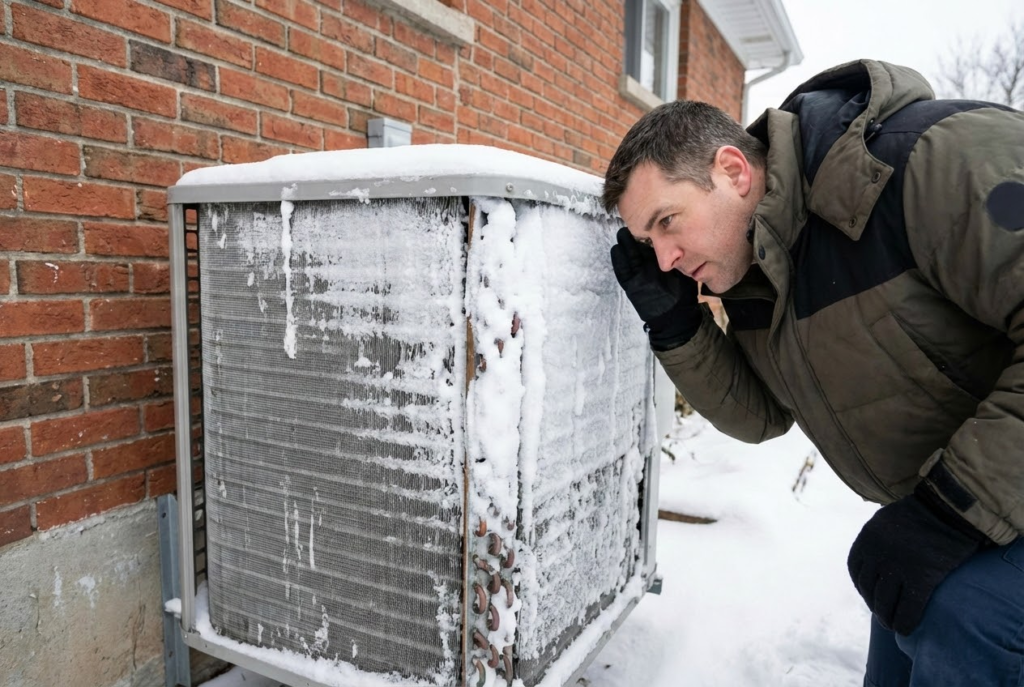
Seeing ice on your outdoor unit in winter doesn’t automatically mean something’s broken. Heat pumps pull heat from outside air even when it’s freezing out. That process creates moisture that freezes on the coils. Your heat pump knows this happens, so it has a defrost cycle. Every hour or so the system switches to cooling mode briefly to melt the ice off. You’ll see steam coming off the unit when this happens. That’s normal.
What’s not normal is ice that never goes away. Thick ice coating your whole unit that stays there for hours. This means your defrost cycle stopped working. Either the sensor that tells the system when to defrost died, or the control board that runs defrost quit. Without working defrost, ice builds up until your heat pump can’t pull any heat from the outside air. Now your backup electric heat runs constantly trying to keep your house warm, and your electric bill goes nuts.
Ice on your heat pump in summer is always a problem. Same as a regular AC—something’s blocking airflow. Dirty filter, clogged return vents, filthy indoor coils. Clean whatever’s clogged and the ice disappears.
Backup Heat Constantly Running (Expensive Problem)
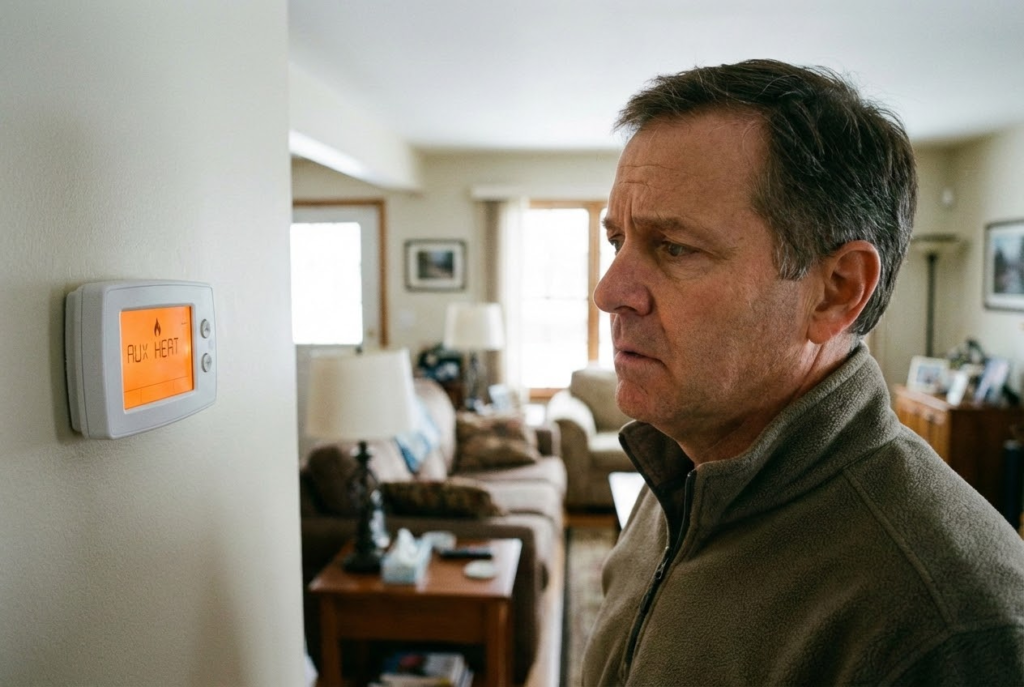
Heat pumps have electric backup heat that’s only supposed to kick in when it’s really cold outside or during defrost cycles. Backup heat costs about three times more to run than the heat pump. If backup heat runs all the time instead of just occasionally, your electric bill explodes. We’re talking $400-600 monthly electric bills in winter instead of $150-200.
This happens when your heat pump isn’t working right. Refrigerant leak drops the heat pump’s heating power, so backup heat has to run constantly to keep the house warm. Broken defrost cycle makes the system think it’s always too cold for the heat pump to work. Bad thermostat settings tell the system to use backup heat when it shouldn’t.
Your thermostat usually has a light that shows when backup heat is running—labeled “AUX” or “EMERGENCY HEAT.” If that light never turns off, something’s wrong. Get it fixed before your next electric bill shows up. Learning about how heat pump systems manage heating cycles helps you understand what’s normal and what’s not.
Heat Pump Running But Not Keeping House Warm or Cool
Your heat pump runs constantly but your house won’t get warmer or cooler no matter how long it runs. Thermostat says 72, house feels like 68, heat pump never stops trying. This happens for a few different reasons. Low refrigerant is the big one. Heat pumps need exact refrigerant levels to work right. Too low and they can’t move heat properly—can’t pull it from outside in winter or dump it outside in summer.
Dirty coils do the same thing. Outdoor coil covered in dirt and cottonwood seeds can’t grab heat from the air. Indoor coil caked with dust restricts airflow. Either way your heat pump runs all day never quite keeping up. Old compressors with worn valves gradually lose power over the years until they can’t maintain temperature anymore.
Or maybe your heat pump is just too small for your house. Somebody installed a 2-ton unit when you needed a 3-ton. Nothing’s broken—the heat pump is just working as hard as it can and it’s not enough. That’s not a repair issue, that’s a sizing problem. If your system keeps failing when you need it most, call us for fast emergency repairs before you’re stuck in extreme temperatures.
Refrigerant Leaks in Heat Pumps vs Regular ACs
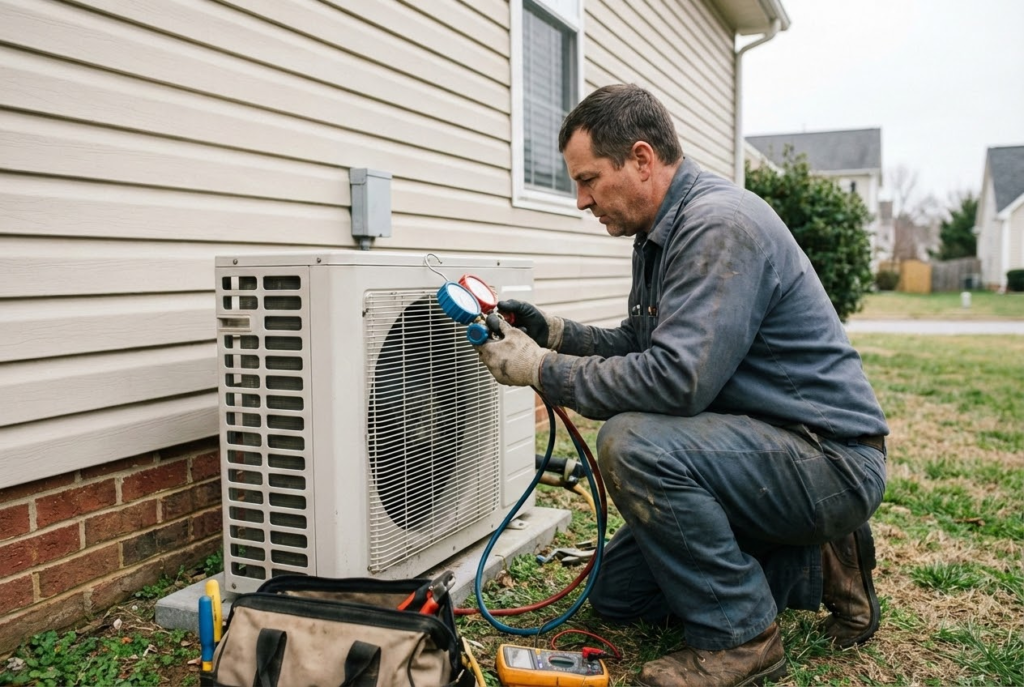
Heat pumps spring refrigerant leaks more often than regular ACs because they’ve got more components and run year-round under changing pressures. Heat pumps have reversing valves, extra check valves, additional line connections—all stuff regular ACs don’t have. More parts means more places for leaks to develop.
Heat pump refrigerant leaks look different depending on the season. Summer leak when the heat pump is cooling acts like a regular AC leak—poor cooling, ice on coils, system running constantly. Winter leak when the heat pump is heating causes crappy heating performance and makes backup heat run all the time. You’d never see that symptom with a regular AC because regular ACs don’t heat.
Fixing refrigerant leaks costs $300-800 depending where the leak is. Outdoor leaks are cheaper because they’re easy to reach. Leaks inside walls or under concrete slabs cost more from all the work getting to them. After fixing the leak, we refill the refrigerant. Small leaks caught early might only need a pound or two added back. Leaks ignored for months might need the whole system recharged.
The Truth About Heat Pump Repairs
Heat Pump Repairs Are More Expensive Than Regular AC Repairs
Nobody wants to hear this, but heat pump repairs cost more than regular AC repairs. A capacitor replacement on a regular AC runs $200-300. Same capacitor on a heat pump costs $250-350. Reversing valve replacement runs $600-1,200. Regular ACs don’t have reversing valves, so they never need that repair. Heat pumps have more components, more things that can break, and parts cost more because they’re not as common.
We’re not charging more to rip you off. Heat pump parts literally cost more to buy. Reversing valves, defrost sensors, defrost control boards—these are heat pump-specific parts that suppliers charge premium prices for because they don’t sell as many of them. Labor takes longer too because diagnosing heat pump problems is trickier when the system does both heating and cooling. We have to figure out which mode is failing and why.
Most Heat Pump Problems Show Up in Winter
Heat pumps fail more often in winter than summer even though they work year-round. Why? Because heating mode stresses the system way more than cooling mode. Your heat pump works harder pulling heat from 20-degree outside air than it does dumping heat into 95-degree outside air. That extra strain causes failures.
Defrost problems only show up in winter when ice forms on outdoor coils. Reversing valve issues show up more in winter when the valve switches between heating and defrost cycles constantly. Backup heat problems you’d never notice in summer become obvious in winter when your electric bill triples. If your heat pump made it through last summer fine but starts having problems now, that’s totally normal for heat pumps. Winter is when they show their weaknesses.
Get Heat Pump Repairs Done Fast
Call (314) 600-2202 for heat pump repair in St. Louis. We diagnose and fix both heating and cooling problems. Available 24/7 when your system quits working.